Input Devices
insert description of the assignment here
2. Prepare your file for printing using PrusaSlicer (or equivalent), and upload your 3D model file (e.g. .f3z), STL file, and sliced gcode file to your documentation.
3. Scan something.
For this project, we had a variety of tasks to complete. I started off by using a capacitive sensor to measure the weight of some 3d printed snoralax models. The circuit is pretty simple, and measures the capacitance between the two sheets of copper, which increases as the foam is crushed by the immense weight of the snoralax models and increases the capacitance between the two plates.
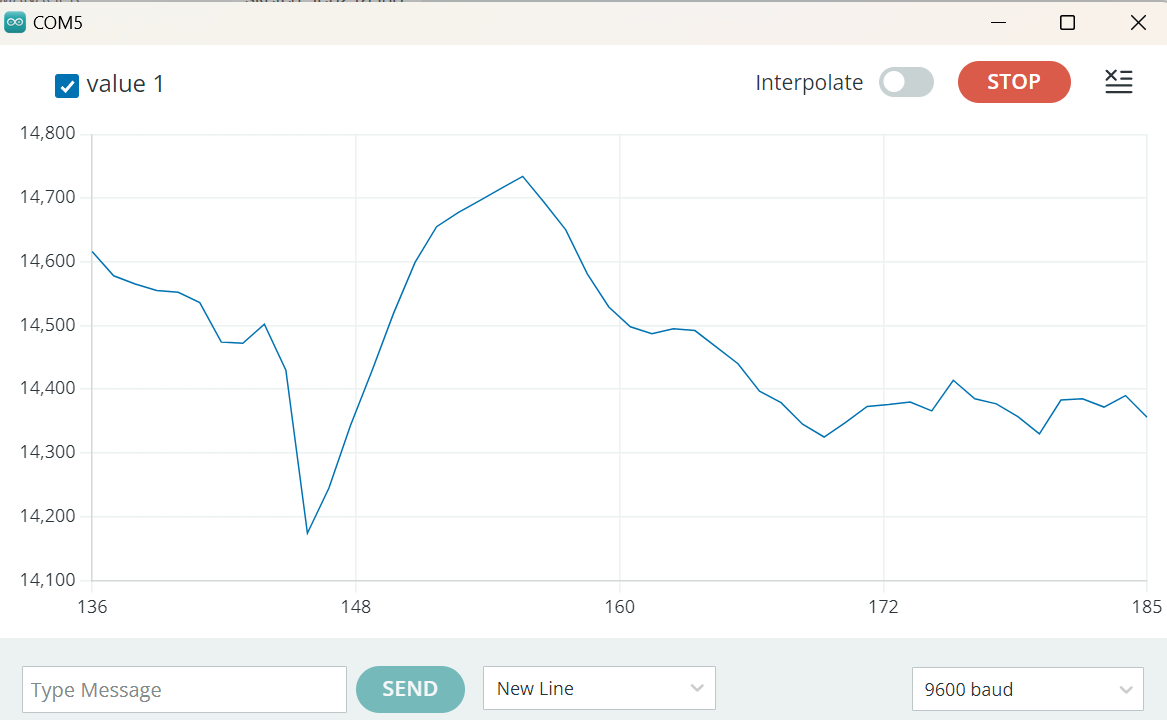
input reading for no snoralaxes on the plate, our "0."
Now, we'll add the crushing weight of one snoralax.
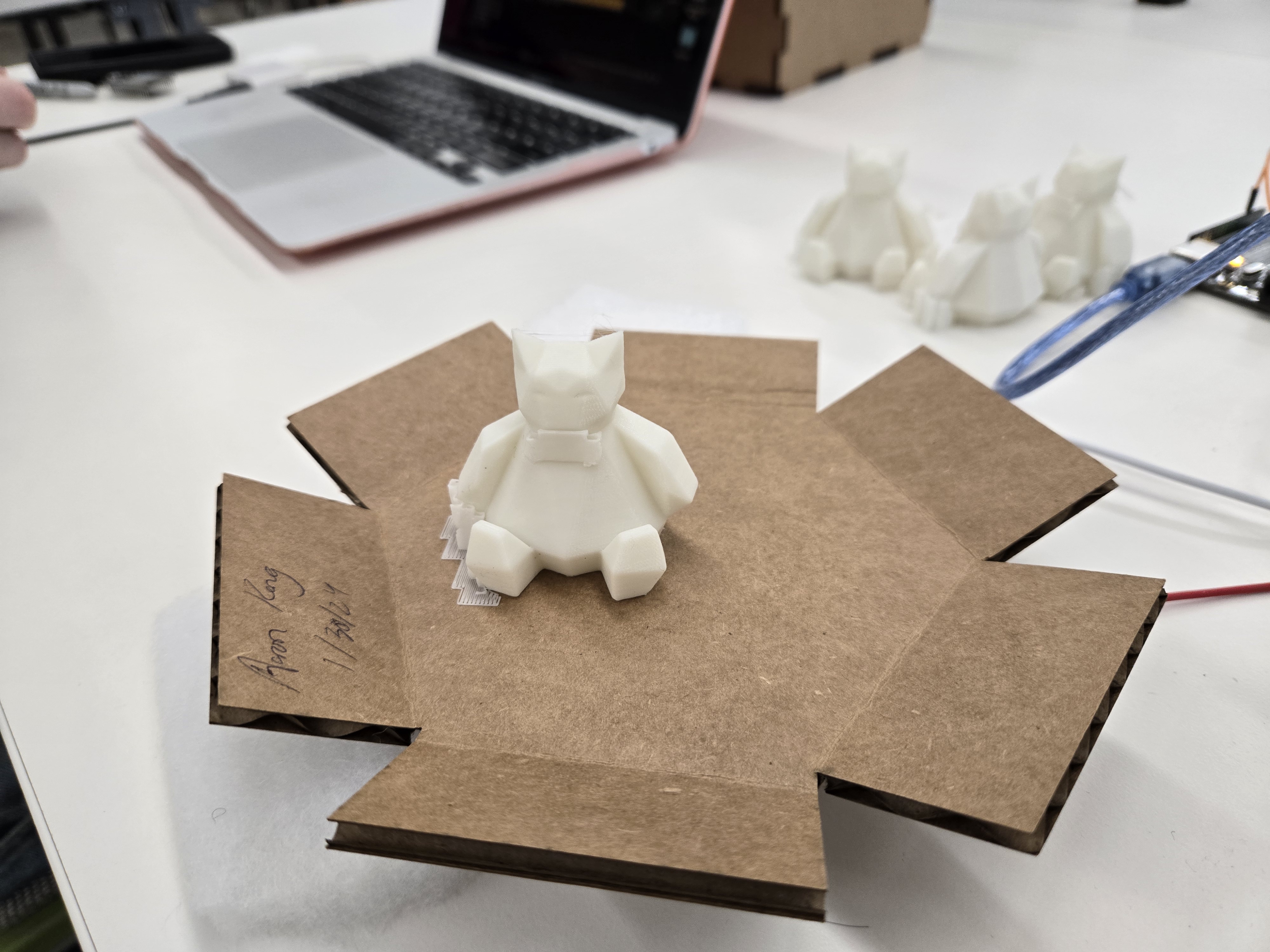
one snoralax!
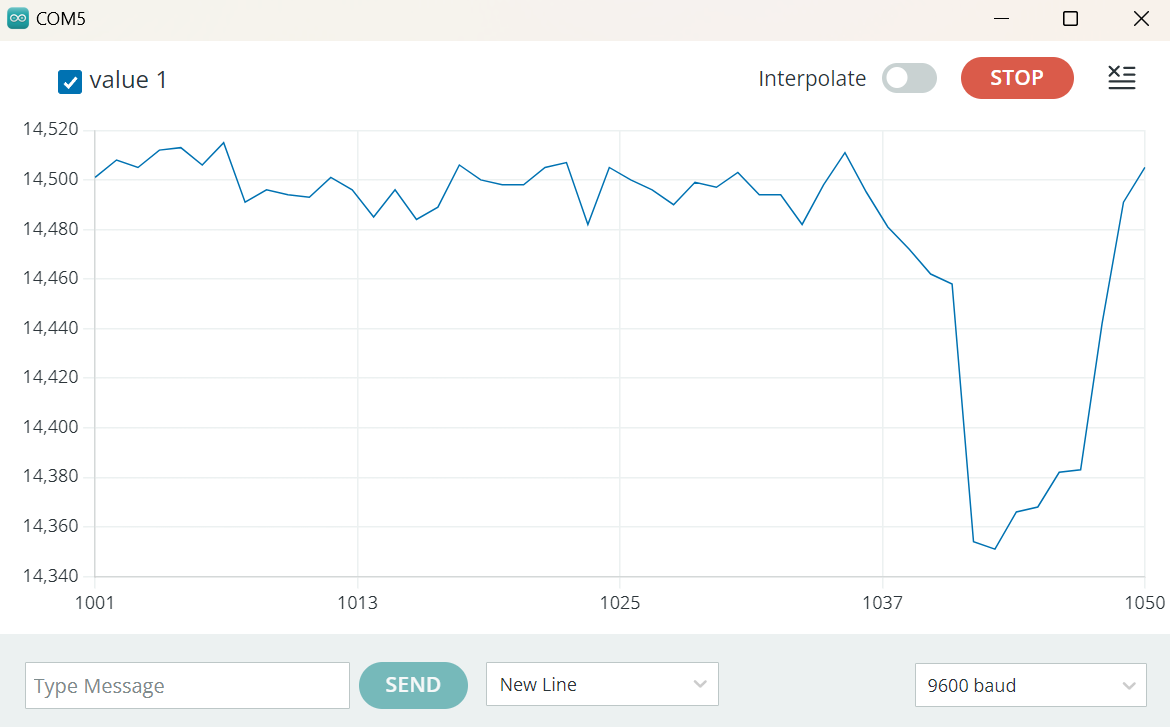
input reading for one snoralax.
5 snoralax on! Let's see what we get:
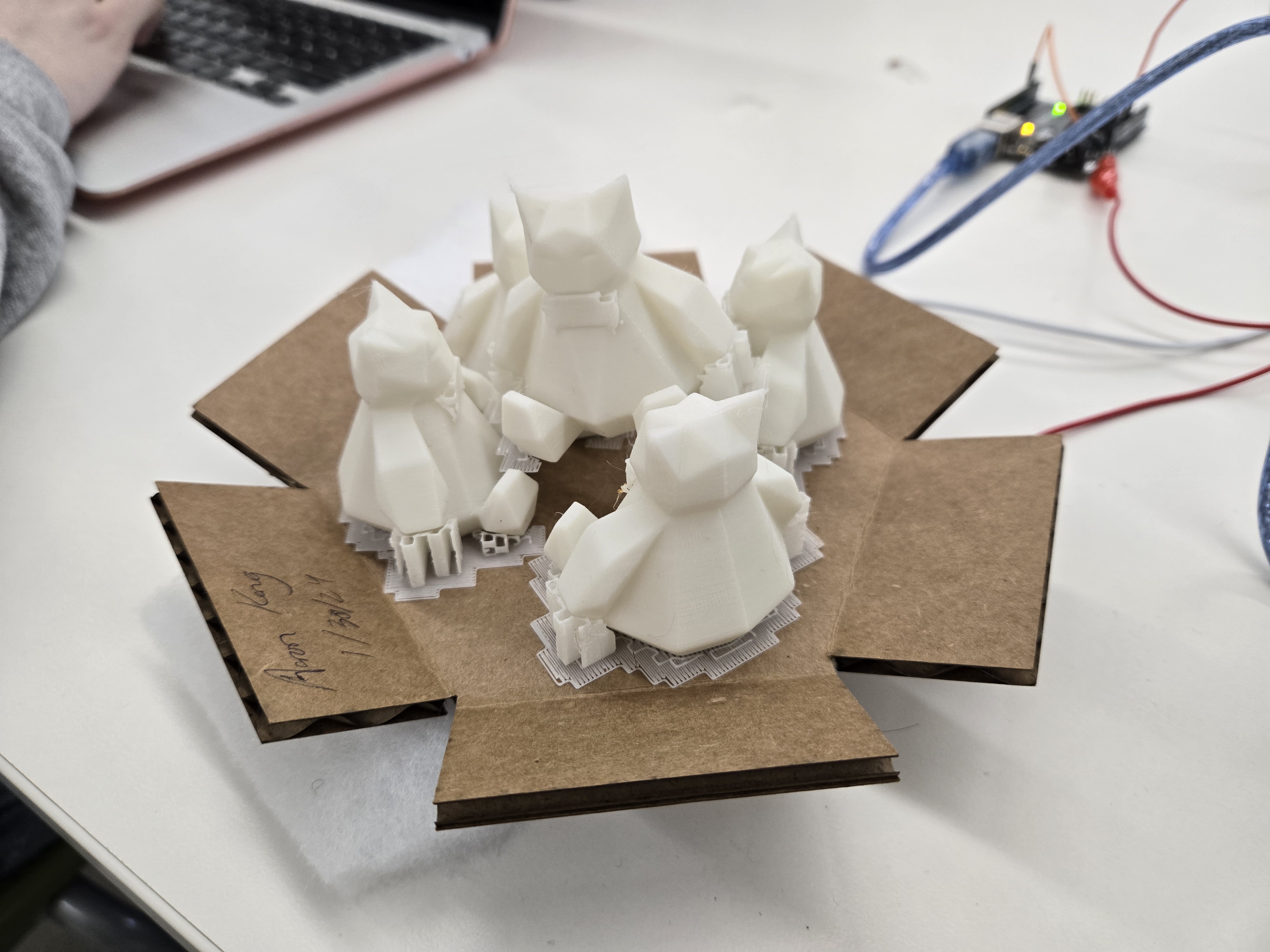
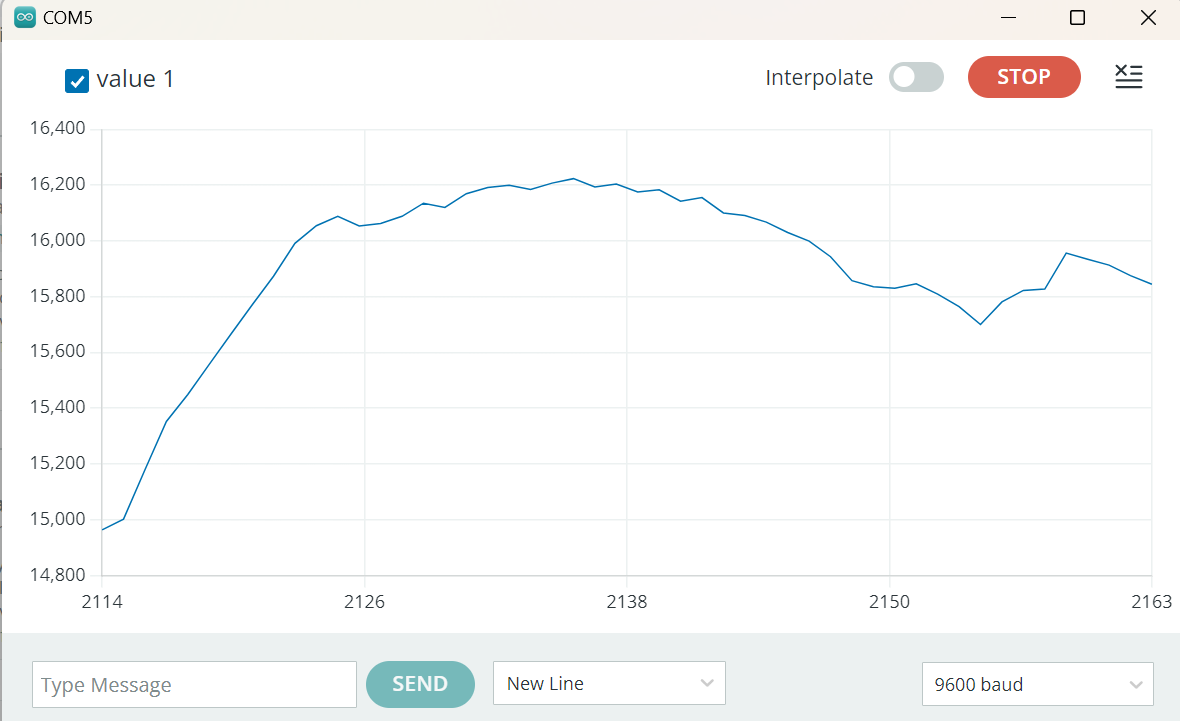
input reading for the party of snoralaxes (5). What a time!
Due to the natural fluxuations of the capacitance between the two plates, it was hard to measure the "mass" of one snoralax. However, as I added more snoralaxes, I was able to better see that the change in capacitance and that indeed, my weight sensor was working. Plotting the averages of the change in capacitance, we get the following graph: